Drowning is the leading cause of death among children and dependent adults with autism following elopement, making water a top priority for search response.
Click here to view NASC's elopement data
dashboard for 2026 and 2025.
Dispatchers, a water-focused Wireless Emergency
Alert (WEA) template is available here.
Why Search Water First?
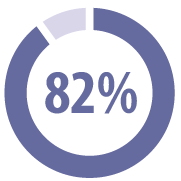
NASC's longitudinal surveillance data on autism-related elopement fatalities, spanning 1974 to the present, show that approximately 82% of deaths are due to drowning.¹ Nearly every child was found within half a mile of their last known location, underscoring the importance of immediately searching nearby water when an autistic child is missing.
In addition, a research study conducted by Columbia University showed that children with autism are 160 times more likely to die from drowning than the general pediatric population.2
Water sources are not always obvious. In addition to ponds, pools, lakes, and rivers, children and dependents with autism may enter less conventional water hazards such as:
- Drainage ditches
- Waste water
- Horse troughs or livestock watering stations
- Stock pools
- Icy puddles or partially frozen bodies of water
- Decorative ponds in parks or community spaces


Why Are Children with Autism Attracted to Water?
Based on decades of research by members of the National Autism Safety Council, children with autism who go missing are often found in quiet, calm settings that help them regulate and find comfort.4 Water, in particular, offers these soothing qualities. Because children with autism can become easily overwhelmed, being submerged in water can essentially act as mute button for an overstimulated nervous system. For sensory-seeking children, the patterned reflections, movement, and sounds of water can be especially appealing.
On the other hand, some children appear to avoid or dislike water, resisting baths or refusing to swim. It’s important not to assume this aversion means they would stay away from water. In many tragic cases, children described as “afraid of” or “uninterested in” water were still found in it. Remember that a child or adult who demonstrates aversions or fears to bath, faucet, or pool water may perceive ponds, lakes, and other forms of water differently. Search efforts should always focus on nearby water sources, regardless of its temperature or type.

What Can the Community Do?
If you see or hear about a missing child or dependent adult with autism in your area, your help can make a lifesaving difference.

Immediately check your property for water hazards, especially if you have a pond, pool, drainage ditch, or other water sources.
Check in if you notice a child alone near water, especially if they do not appear to be carrying anything, such as a fishing pole.
Approach calmly and contact emergency services right away if you encounter a child or dependent who appears lost and shows signs of autism.
Community awareness and quick action are vital in preventing a tragedy.
How to Identify Water Near You
To be better prepared, you can proactively identify all nearby water hazards around your home.
A simple way to do this is to Google your home address and scan satellite maps for visible water bodies. Don’t forget to check for hidden or seasonal water sources that may not be immediately obvious.


Children Alone in the Community
If you see a child alone, pause, speak calmly, and assess for safety. Every child with autism is unique and their needs may not be visible at first glance. Here are behaviors to notice:

- Seems unaware of surroundings
- Does not respond to questions or instructions
- Avoids eye contact; does not point or wave
- Makes unusual vocalizations
- Enters water, streets, or other dangerous areas without hesitation
- Flaps hands, rocks, or paces repetitively
- Wears a pull-up or diaper beyond toddler years
- Covers ears or reacts strongly to loud sounds
- Does not seek help or show signs of fear or panic
- Appears emotionally flat or intensely focused
- Displays unusual postures, toe-walking, stiff movements, or clenched fists
- Looks around for familiar faces or landmarks
- Responds when spoken to or called
- Engages in eye contact, pointing, waving, or other social gestures
- Uses typical language
- Shows fear of or avoids obvious dangers
- Rarely engages in repetitive behaviors
- Is toilet-trained beyond toddler years
- Rarely reacts strongly to everyday sounds
- Cries, calls for parents, or seeks help when lost
- Appears engaged with surroundings
- Moves with relaxed, fluid body posture
These same behaviors may also apply to dependent teens and adults with autism. It’s always best to check in if you feel someone may be lost or in danger.
- Call 911 if a child or dependent seems lost, unable to respond, or in danger.
- Speak calmly and simply.
- Do not assume they are “fine” or “misbehaving.”
- Stay nearby until help arrives. Intervene immediately if danger is imminent.

Remember: Autistic children and adults do not have a specific look. Behaviors may vary, and safety needs are individual. Approach every person with care and attention.
References:
- 1. McIlwain, L. Longitudinal surveillance and analysis of autism-related elopement fatalities, 1974 to present, maintained through the National Autism Safety Council.
2. McIlwain, L, Hudgins, C, Heaps, J. Autism-Related Elopement Fatalities in the United States 2025 REVIEW. National Autism Safety Council. February 2026.
3. Guan, J., & Li, G. (2017). Injury mortality in individuals with autism. American Journal of Public Health, 107(5), 791–793 https://doi.org/10.2105/AJPH.2017.303696
4. Mcllwain, L., et al. (2017). Mortality & risk in ASD wandering/elopement, 2011–2016. http://bit.ly/4iyeN21